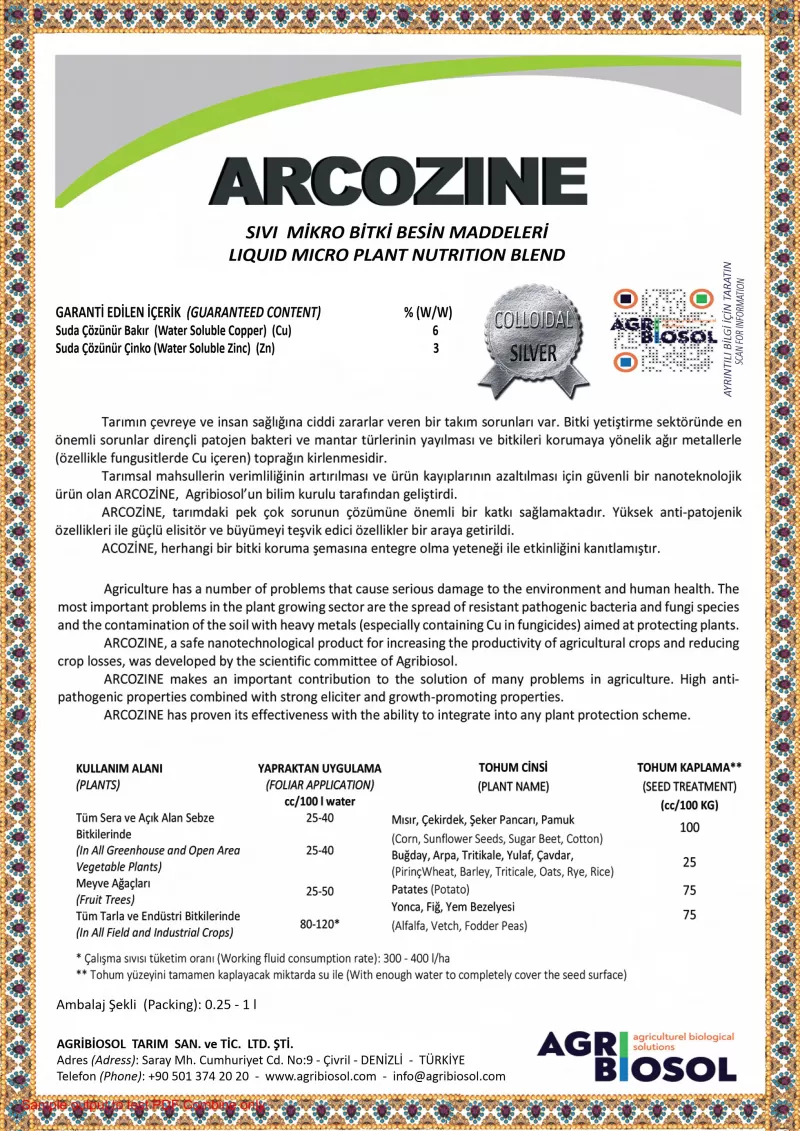

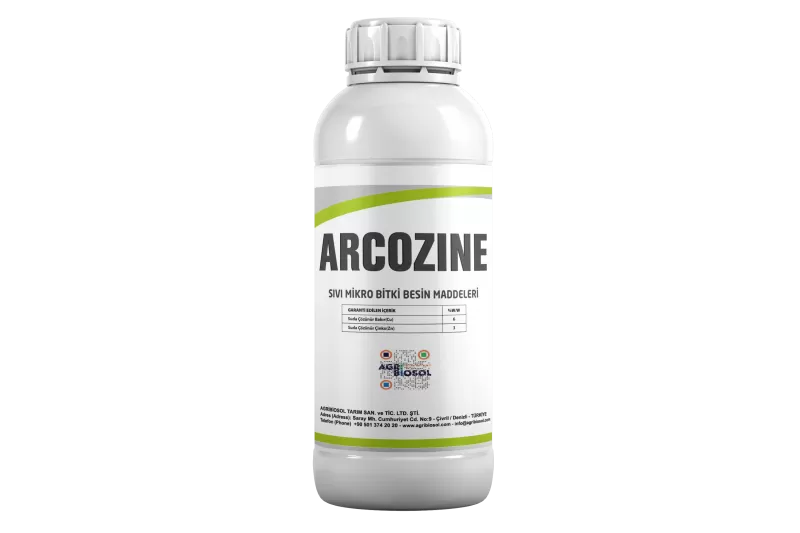
Arcozine
Liquid micronutrients · Reg. no 2022TK4815
- COPPER (Cu)
- 6%
- ZINC (Zn)
- 3%
What it does
Agriculture has a number of problems that cause serious harm to the environment and to human health. In the crop production sector, the most significant of these are the spread of resistant pathogenic bacteria and fungal species, and the contamination of the soil with the heavy metals used for crop protection (particularly the Cu contained in fungicides).
Read more
ARCOZINE, a safe nanotechnology product for raising the productivity of agricultural crops and reducing crop losses, was developed by Agribiosol's scientific board.
ARCOZINE makes a significant contribution to solving many problems in agriculture. Its high anti-pathogenic properties have been combined with strong elicitor and growth-promoting properties.
ARCOZINE has proven its efficacy through its ability to be integrated into any crop protection programme.
General properties
It has a growth-promoting effect. It strengthens the plant's immune system against diseases and adverse environmental factors. It is effective against a wide range of diseases, including those that are difficult to eliminate, and confers long-lasting immunity to pathogens. It improves the presentation and quality of agricultural produce. It can be used in eco-farming (it is harmless to the environment).
Mode of action
ARCOZİNE combines fungicidal and bactericidal properties with those of an abiotic stress reliever and a plant growth regulator. Thanks to this combination of properties, it provides immunity-inducing and growth-stimulating action even at small doses, and at higher doses it shows bactericidal and fungicidal activity alongside its growth-stimulating and development-regulating effect. The combination of these effects increases the effectiveness of existing crop protection programmes.
Growth-supporting effect
The growth-stimulating mode of action of ARCOZINE is linked to its ability to influence the activity of enzymes and membrane protein receptors in the plant, and it carries out the following process.
Effect on auxin concentration
Arcozine leads to an increase in the plant's content of auxins (growth hormones). The enzyme systems that metabolise phytohormones maintain a certain auxin concentration in plants. A decrease in the activity of such enzyme systems causes the auxin concentration to rise even when auxin production does not increase. This process contributes to stimulating the growth and development of plants, to the formation of a strong root system and to reducing the overall impact of the stress factors affecting the plant.
Antibacterial and fungicidal effect
The bactericidal and fungicidal action of ARCOZINE takes place in two ways: directly and indirectly.
Direct action: the nanoparticles contained in Arcozine's chelating agents attach to the cell walls of phytopathogenic micro-organisms. These nanoparticles oxidise and build up to a high concentration on the cell wall of the pathogenic micro-organism, thereby disrupting the normal functioning of the cell membrane proteins, particularly the transport proteins, and causing the death of the pathogenic cell. Because this oxidation takes place gradually, it prolongs the duration of action of fungicides and bactericides.
Indirect effect: Arcozine keeps crops safely protected, stimulates growth activity, increases yield and also significantly reduces pesticide stress on the soil and on plants.
Dosage and application periods
Wheat, Barley, Triticale, Oats, Rye, Rice, etc
- Foliar application
- 25-40cc/da
- Application timing
- 2 applications from the tillering stage onwards
Maize, Sunflower, Cotton
- Foliar application
- 25-40cc/da
- Application timing
- 2 applications at 10-15 day intervals from the 4-6 leaf stage
Tuber Crops (Potato, Sugar Beet, Carrot, etc.)
- Foliar application
- 25-40cc/da
- Application timing
- 2-3 applications at 15-day intervals from the 4-6 leaf stage
Legumes (Lentil-Chickpea-Bean, Pea, etc.)
- Foliar application
- 25-40cc/da
- Application timing
- 2-3 applications at 15-day intervals from the 4-6 leaf stage
Forage Crops (Lucerne, Vetch, Pea, etc.)
- Foliar application
- 25-40cc/da
- Application timing
- 1-2 applications at 10-15 day intervals from the 4-6 leaf stage
Open Field Vegetables (Tomato, Pepper, Aubergine, Cucumber, Onion, Lettuce, Broccoli, Cauliflower, Spinach, Cabbage, etc.)
- Foliar application
- 25-40cc/100 lt water
- Application timing
- 1-2 applications at 15-day intervals throughout the season after transplanting
Greenhouse and Protected Vegetables
- Foliar application
- 25-40cc/100 lt water
- Application timing
- 2-3 applications at 15-day intervals throughout the season after transplanting
Melon, Watermelon, Squash, Cucumber
- Foliar application
- 20-40cc/100 lt water
- Application timing
- 2-3 applications at 15-day intervals from transplanting until harvest
Strawberry
- Foliar application
- 25-40cc/100 lt water
- Application timing
- 3 applications at 20-day intervals from the 5-6 leaf stage
Grapevine
- Foliar application
- 25-50cc/100 lt water
- Application timing
- 3-4 applications: before flowering, at fruit set and during the development period
Citrus, Olive
- Foliar application
- 25-50cc/100 lt water
- Application timing
- 3-4 applications: before flowering, at fruit set and during the development period
Fruit Trees (Apple, Pear-Apricot, Plum, Peach, Nectarine, Cherry, Sour Cherry, Pomegranate, Banana, Fig, Kiwi, Almond-Pistachio, Walnut)
- Foliar application
- 25-50cc/100 lt water
- Application timing
- 3-4 applications: before flowering, at fruit set and during the development period
| Seed type | Seed treatment (cc/100 kg) |
|---|---|
| Maize, Sunflower, Sugar Beet, Cotton | 100 |
| Wheat, Barley, Triticale, Oats, Rye, Rice | 25 |
| Potato | 75 |
| Lucerne, Vetch, Forage Pea | 75 |
With enough water to coat the seed surface completely
- Application
- Foliar applied
- Category
- Speciality products
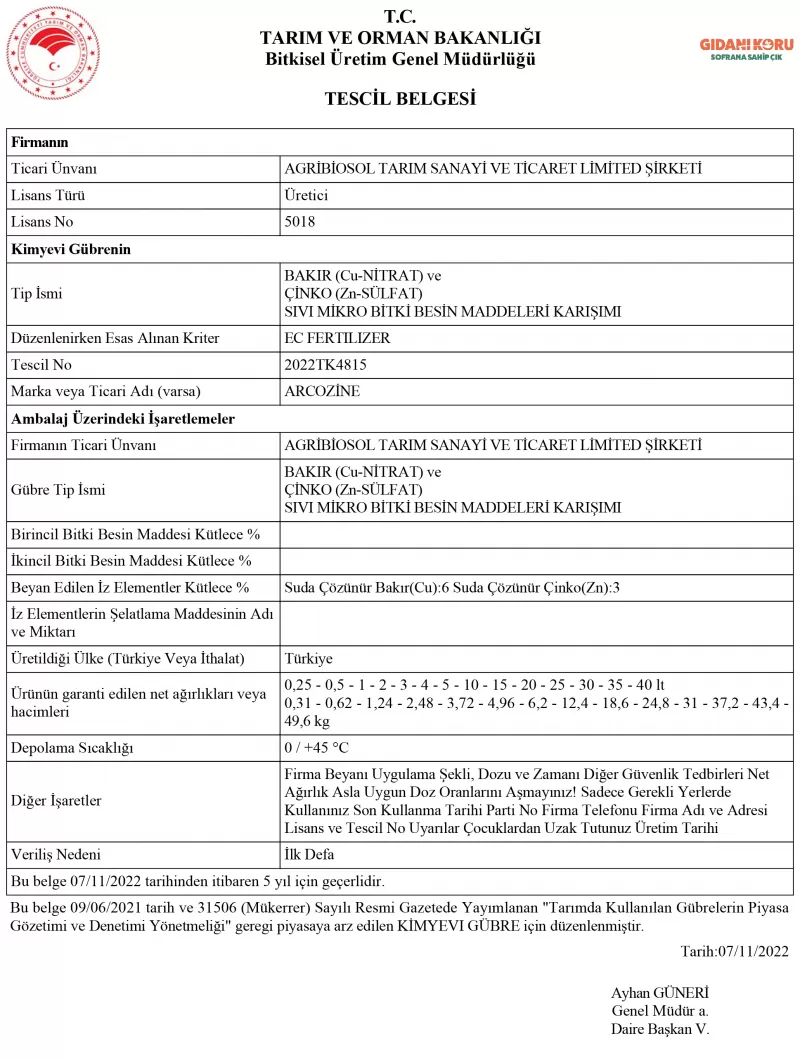
- Registration no
- 2022TK4815
- Licence no
- 5018
- Licence type
- Producer
- Certificate type
- Registration certificate (chemical fertiliser)
- Registration year
- 2022 · 5 years
- Packaging
- 0.25 - 1 l
- Storage temperature
- 0 / +45 °C
- Country of origin
- Türkiye